Geometric in street photography
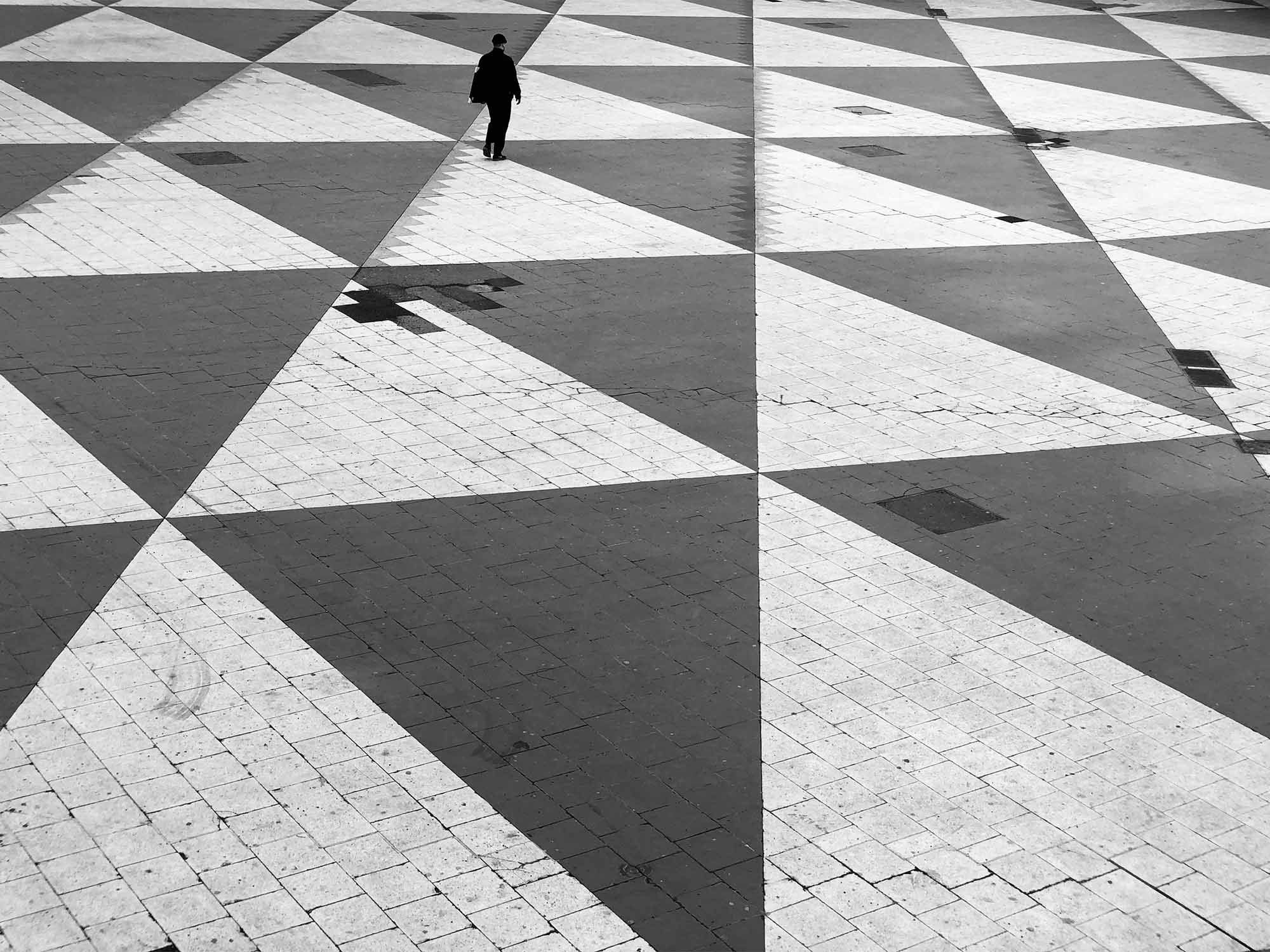
What is Geometry in Street Photography?
Patterns, textures, shapes, lines, tones, color, and light are all used to give a visual experience. This involves leading lines for the viewer to help guide their eye through the image. The subject can be anything from vast cityscapes to patterns. It is up to the photographer how they want to capture it, shooting different shots from various perspectives. Trying to make it interesting to look at and see how different a perspective can change from shooting at a different angle.
The best way to get started with geometric in street photography is to look for geometric patterns, like repeated shapes or parallel lines. Light and weather can both play a big role when you photograph geometrical shapes outdoors. A lot of interesting geometric effects can come from shadows, which vary dramatically throughout the day. Try looking at a certain structure with the sun shining on it early in the morning or just before sunset, instead of in the middle of the day. You’ll get softer light and different colors in the morning and closer to dusk, as opposed to the harsh, sharp shadows at midday.
Tips to remember
- Don’t overwhelm your viewer with too many colors or objects in your photo. Most geometric photos verge on minimalism and feature a limited amount of color and shapes, so the patterns can shine through.
- Remember the eye goes toward the lightest part of the photo, you are guiding your viewer’s eye
- Follow the rule of thirds; can help make sure you have a strong composition and that your image feels compelling